
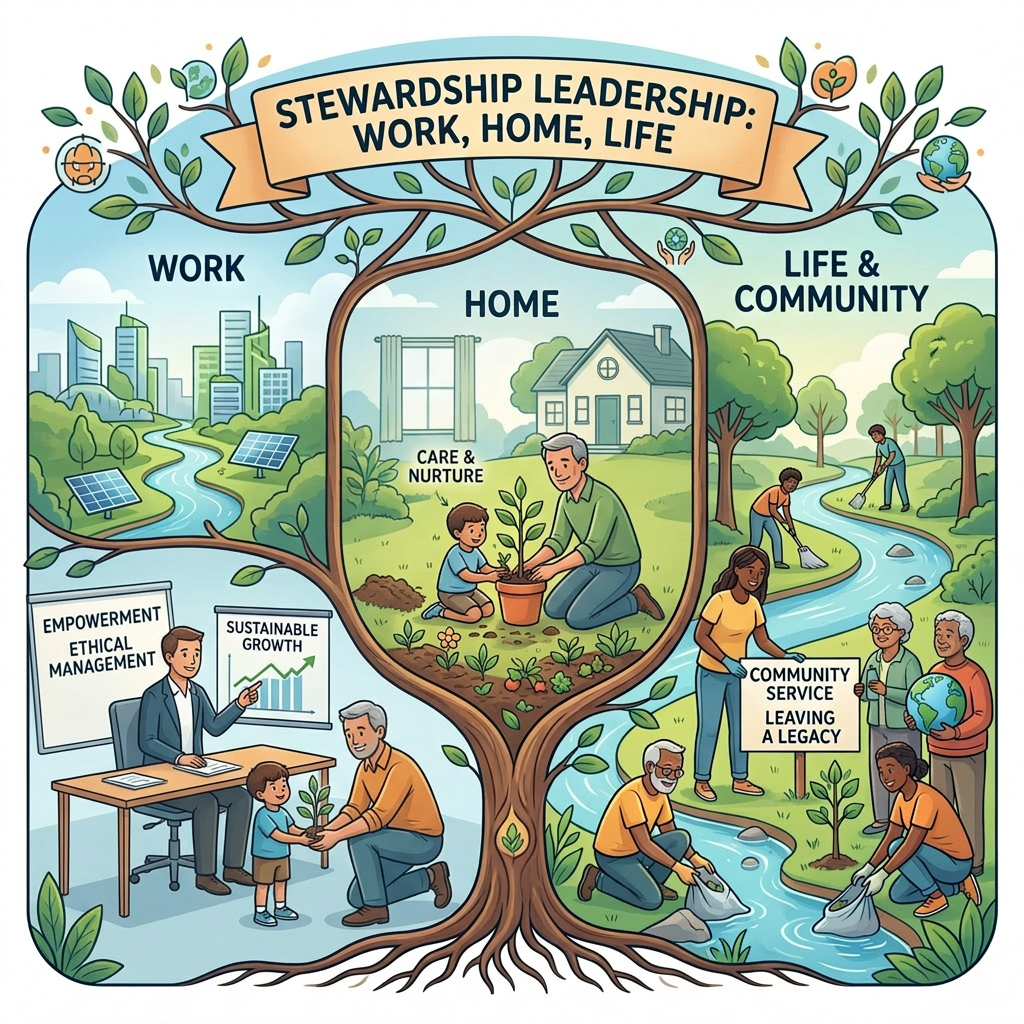
Leadership is often misunderstood. Many people associate it with authority, position, or control, but true leadership operates from a very different foundation. At its core, leadership is stewardship. It is the recognition that everything we are responsible for—our teams, our families, our time, and our resources—has been entrusted to us, not owned by us. That shift in thinking changes how we lead. When we operate from ownership, we tend to focus on control and personal outcomes. When we operate from stewardship, we focus on responsibility, service, and long-term impact.
Stewardship leadership is built on a few core principles that guide decision-making across every area of life:
- Responsibility over authority
- Service over status
- Impact over recognition
These principles are not situational. Too often, people separate how they lead at work from how they lead at home or in their personal lives. That separation creates inconsistency and limits effectiveness. Strong leadership comes when those roles are aligned and grounded in the same values. When a leader shows up consistently across environments, trust grows, and influence expands.
Why Stewardship Leadership Matters Today
Many of the challenges organizations and families face today are not process issues—they are leadership issues rooted in a lack of stewardship. Businesses struggle with disengagement, lack of trust, and high turnover. Families struggle with connection, intentional time, and competing priorities. These problems are not solved by systems alone. They are solved when leaders begin asking a different question: “What has been entrusted to me?”
That question shifts focus away from personal gain and toward responsibility. It reframes leadership from something you have to something you are accountable for.
Leadership vs. Management in Stewardship
A key part of stewardship leadership is understanding the difference between leadership and management. Leadership sets direction and defines vision, while management ensures execution and consistency. Both are necessary, and neither works well in isolation.
- Leadership provides direction and purpose
- Management provides structure and execution
A leader who inspires but cannot execute will fall short. A manager who executes without vision will lack purpose. Stewardship requires both to work together in balance.
What Stewardship Leadership Looks Like in Practice
When leaders adopt a stewardship mindset, their behavior changes in meaningful ways. They begin to prioritize people over processes and long-term growth over short-term wins. They take responsibility when things go wrong and share credit when things go right.
This shows up clearly in different roles:
- At work: Leaders focus on developing people, not just driving performance
- At home: Parents recognize their role in shaping values and character
- In personal life: Individuals manage time, energy, and priorities with intention
The most important shift is moving from ownership to accountability. Ownership asks, “What is mine?” Stewardship asks, “What am I responsible for?” That shift leads to better decisions and stronger relationships.
Final Thought
Leadership is not about being in charge. It is about being responsible. When leaders embrace stewardship, they move beyond control and begin to create lasting impact. That is where real influence begins.